Are you considering repainting your home’s exterior but feeling unsure about where to start? Look no further, because in this article, we will explore the best approach to repainting a home’s exterior. Painting the exterior of your house can not only enhance its overall appearance but also protect it from wear and tear. From selecting the right paint to preparing the surface, we will provide you with valuable tips and insights to help you achieve a professional-looking finish. So, let’s dive in and discover the secrets to successfully repainting your home’s exterior.
Choosing the Right Paint
When it comes to repainting your home’s exterior, one of the most important steps is choosing the right paint. There are several factors to consider in this process. First and foremost, you need to consider the type of material your home’s exterior is made of. Different materials, such as wood, brick, stucco, or metal, may require different types of paint.
Once you have determined the type of material, you can move on to selecting the appropriate color. This is a fun and creative step where you can let your personal style shine. Consider the overall aesthetic of your home, as well as the colors of the surrounding houses and the natural environment. You also want to think about any homeowner association rules or regulations that may restrict your color choices.
Another important aspect to consider when choosing the right paint is the paint finish. The finish refers to the sheen or glossiness of the paint. Common options include flat, satin, semi-gloss, and high-gloss finishes. Each finish has its own benefits and drawbacks, so it’s essential to evaluate your specific needs and preferences before making a decision.
Preparation Steps
Before you start painting, it’s crucial to prepare the surfaces properly. This step ensures that the paint adheres well and lasts for a long time. The first step in preparation is to clean the surfaces thoroughly. Use a mild detergent and a scrub brush or pressure washer to remove any dirt, grime, or mold. This will create a clean canvas for your new paint job.
Next, you need to remove any loose or peeling paint. Using a scraper or a wire brush, gently scrape away any areas where the paint is flaking or peeling. This step is crucial to achieving a smooth and even paint finish. Be sure to wear safety goggles and a mask to protect yourself from any paint particles that may become airborne.
After removing loose paint, it’s time to repair any damages. Fill in any cracks, holes, or gaps with a suitable filler or putty. Sand down the repaired areas to create a smooth surface. This step is essential for achieving a professional-looking paint job.
Lastly, don’t forget to protect the surrounding areas before you start painting. Cover windows, doors, plants, and any other objects or areas that you don’t want to get paint on. Use masking tape, drop cloths, or plastic sheets to ensure that your paint job stays confined to the intended surfaces.

This image is property of images.pexels.com.
Priming the Surfaces
Depending on the condition of your surfaces and the type of paint you’re using, you may need to apply a primer before painting. Primer helps the paint adhere better and provides a consistent base for the paint to adhere to. To determine if primer is needed, inspect your surfaces for any stains, discoloration, or uneven patches. If you notice any of these issues, it’s best to apply a primer first.
When selecting a primer, make sure it is compatible with the type of paint you’re using and the material of your surfaces. There are specific primers designed for different materials like wood, metal, or masonry. Follow the manufacturer’s instructions for the primer application, including the recommended drying time.
Once you’ve chosen the right primer, apply it to the surfaces using a brush, roller, or sprayer. Make sure to cover the entire surface evenly and allow the primer to dry thoroughly before moving on to the painting step.
Choosing the Painting Technique
Now that you’ve prepped the surfaces and applied the primer, it’s time to choose the painting technique that best suits your project. There are three main techniques to consider: brushing, rolling, and spraying.
Brushing is the most traditional and commonly used technique. It involves using a paintbrush to apply the paint, allowing for precise control and coverage. Brushing is ideal for smaller areas or surfaces with intricate details that require careful attention.
Rolling, on the other hand, is a faster technique that covers larger areas more efficiently. With a paint roller, you can achieve a consistent and uniform finish on larger flat surfaces like walls or siding. Rolling is a popular choice for most exterior paint projects due to its efficiency and ease of use.
Spraying is a technique that uses a paint sprayer to apply a fine mist of paint onto the surfaces. Spraying offers a smooth and even finish, especially on surfaces with texture or irregularities. However, it requires more equipment and can be messier compared to brushing or rolling. Spraying is commonly used by professional painters or for larger-scale projects.
When choosing the painting technique, consider factors such as the size of the surfaces, the intricacy of the details, your level of experience, and the equipment you have available. Each technique has its own advantages and disadvantages, so weigh them carefully before making a decision.

This image is property of images.pexels.com.
Proper Painting Equipment
To achieve the best results when repainting your home’s exterior, it’s important to use high-quality brushes or rollers. High-quality brushes and rollers ensure smooth and even coverage, minimizing the appearance of brush or roller marks on the surfaces.
Consider the use of a paint sprayer if you have a larger project or if you prefer the spraying technique. Paint sprayers can provide a more professional finish, especially on surfaces with texture or irregularities. However, keep in mind that using a sprayer requires more equipment and may require additional safety precautions.
Gather all the necessary tools and supplies before you start painting. This includes brushes, rollers, paint trays, drop cloths, masking tape, and any other accessories needed for your specific painting project. Having everything organized and ready to go will make the painting process smoother and more efficient.
Painting Order
When tackling the exterior painting of your home, it’s important to follow a logical order to ensure the best results. Start from the top and work your way down. This helps prevent paint drips and ensures a smooth transition between sections.
Begin with any trim, including doors, windows, and gutters. Paint these areas first, using a smaller brush or roller for precision. Then move on to the main surfaces, such as walls or siding. Be methodical and paint section by section to maintain consistency and avoid uneven drying times.
Although it may be tempting to jump around and paint whatever section you feel like, following a systematic order will produce the best outcome. Take your time and be patient throughout the process.

This image is property of images.pexels.com.
Applying the Paint
Before you start painting, make sure to stir the paint thoroughly to ensure an even distribution of pigment and other additives. Use a paint stirrer or a wooden stick to mix the paint from the bottom of the can to the top. This step is crucial for achieving consistent color and coverage.
When applying the paint, use consistent and even strokes. Whether you’re brushing, rolling, or spraying, try to maintain a steady pace and apply the paint smoothly. This will help minimize visible brush or roller marks and create a professional-looking finish.
Allow proper drying time between coats. This can vary depending on the type of paint and the weather conditions. Follow the manufacturer’s instructions for the recommended drying time before applying subsequent coats. Rushing this step can lead to uneven drying, poor adhesion, and an unsatisfactory final result.
Dealing with Different Surfaces
Different surfaces require different approaches when it comes to repainting. Here are some guidelines for dealing with common exterior surfaces:
Wood:
For wood surfaces, it’s important to prepare the surface properly by cleaning, sanding, and priming if necessary. Use a paint specifically formulated for exterior wood, such as an acrylic latex paint. Apply the paint with either a brush, roller, or sprayer, depending on your preference.
Brick:
When painting brick, it’s crucial to thoroughly clean and prime the surface. Use a masonry primer to ensure good adhesion. For brick, a breathable paint, such as a mineral-based paint, is recommended to prevent moisture buildup. Apply the paint with a roller, brush, or sprayer, making sure to work the paint into the mortar joints.
Stucco:
Stucco surfaces should be cleaned, repaired, and primed before painting. Use an acrylic or elastomeric paint specifically formulated for stucco. These types of paints can stretch and contract with the movement of the stucco, preventing cracks and peeling. Apply the paint using a roller or sprayer, and work the paint into the textured surface.
Metal:
When painting metal surfaces, it’s essential to remove any rust or corrosion before painting. Use a wire brush or sandpaper to scrape off any loose rust. Apply a metal primer to ensure good adhesion and rust prevention. Choose a paint specifically formulated for metals, such as an enamel or metal spray paint. Apply the paint with a brush or sprayer, following the manufacturer’s instructions.
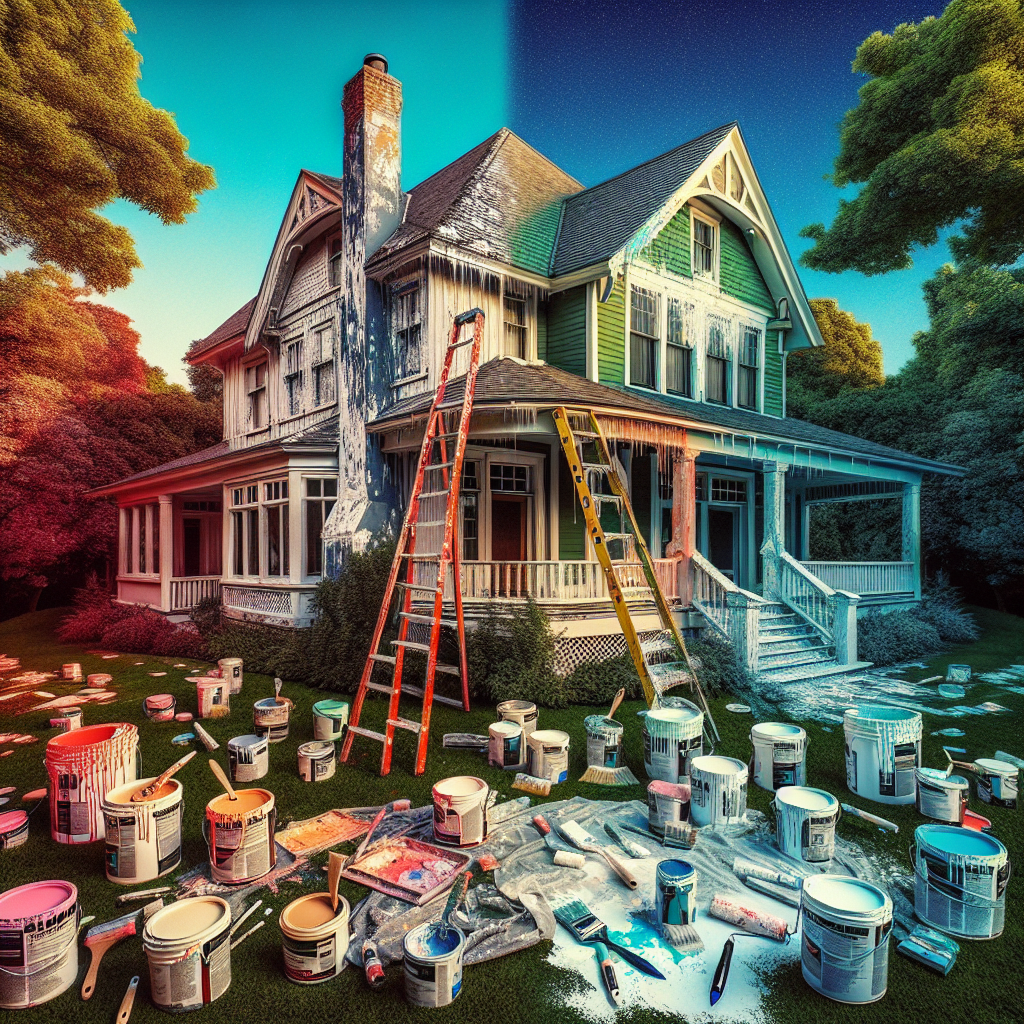
Maintaining Safety
Ensuring your safety while repainting your home’s exterior is paramount. Here are some important safety tips to keep in mind:
Wear protective clothing and gear, such as safety goggles, gloves, and a mask, to protect yourself from paint fumes, debris, and potential hazards.
Work diligently on stable surfaces, such as ladders or scaffolding, to prevent falls or accidents. Make sure the equipment is set up securely and follow proper ladder safety guidelines.
Exercise caution around power lines. Be aware of your surroundings and avoid contact with overhead power lines. If necessary, contact a professional painter or an electrician for assistance when working near power lines.
Remember, safety should always be a priority when undertaking any DIY project, including repainting your home’s exterior.
Finishing Touches
After you have completed the painting process, it’s time for the finishing touches. Clean up any paint spills or splatters immediately using a damp cloth or sponge. This will prevent the paint from drying and becoming more difficult to remove.
Remove any protective coverings, such as drop cloths or masking tape, carefully to avoid disturbing the freshly painted surfaces. Dispose of any paint cans or brushes properly according to your local regulations.
Take the time to inspect the newly painted surfaces for any imperfections or areas that require touch-ups. Address these issues promptly to ensure a flawless finish. Touch up any missed spots or uneven areas with a brush or roller, following the same technique you used during the initial painting process.
By following these comprehensive steps and guidelines, you can confidently approach repainting your home’s exterior. With careful preparation, the right tools and techniques, and a little patience, you’ll be able to achieve a professional-looking paint job that enhances the beauty and curb appeal of your home. Happy painting!